Theatre and performance have been part of my life since I began ballet classes at the age of 3, which led to tap dancing, modern and jazz. I acted, danced and sang in school productions and amateur shows with local theatre companies until my late teens. I loved performing but I was also fascinated by the production elements, in particular the way masks and puppets could transform and be brought to life when worn or manipulated. The magic was all the more satisfying when I had made them myself, usually at home on the kitchen table.
I came close to applying for drama school, but deep down I knew making was more important to me than performing. As part of my GCSE in theatre studies I made two large head pieces for an imaginary production of George Orwell’s Animal Farm, a pig and a cockerel. Amongst the pieces in my A Level Art portfolio, a mechanical, metal sculpture of a bird mounted on a base housing a mechanism, would run and flap its wings with the turn of a windlass. During my Art Foundation year at Warwickshire College I seriously considered a degree in theatre design at Wimbledon College of Arts, but instead chose 3D Design at Manchester Metropolitan University. There I joined the drama society and quickly took over as chairman, successfully producing and performing in a number modest shows for our fellow students.
With hindsight, the progression from theatre, masks and puppets to jewellery makes total sense because, like a mask or a puppet, jewellery is an inanimate object that comes alive on the body. You could argue that jewellery is theatre, the body a stage, a place where objects perform. Jewellery can certainly be theatrical, especially in my case.
Part of me always wondered how different my life would be had I pursued theatre design, but we all have to make choices and sadly we can’t do everything…. or can we?
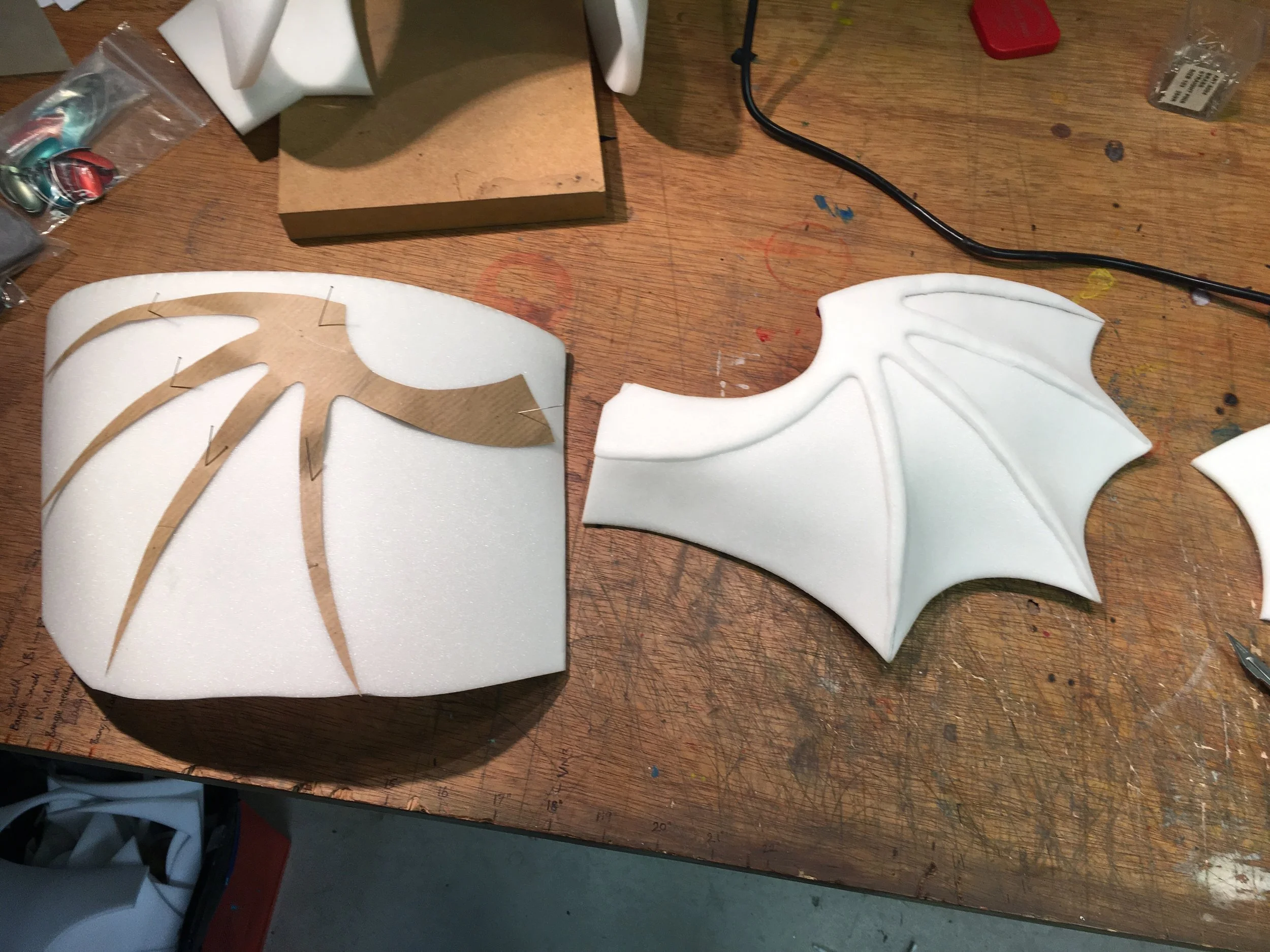
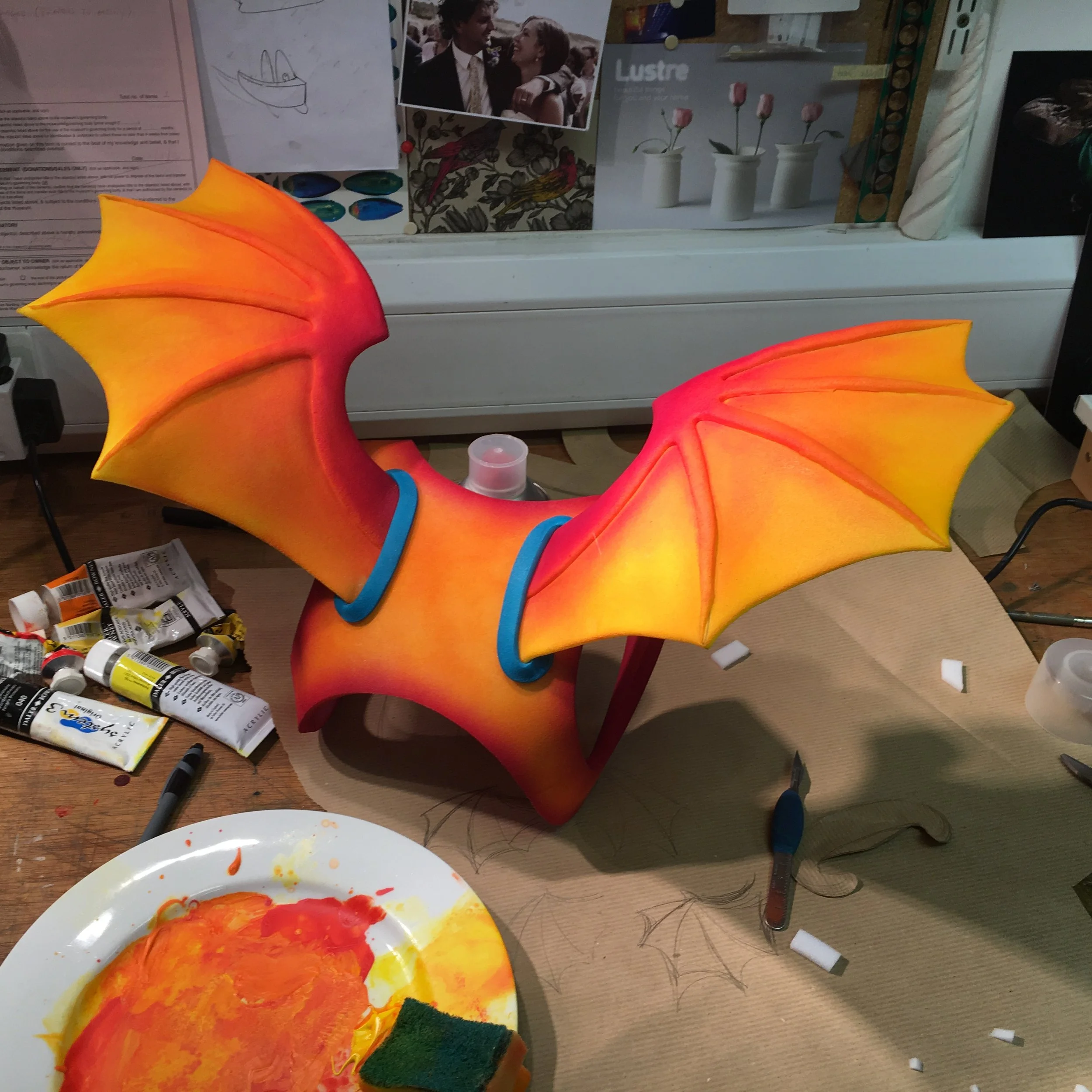
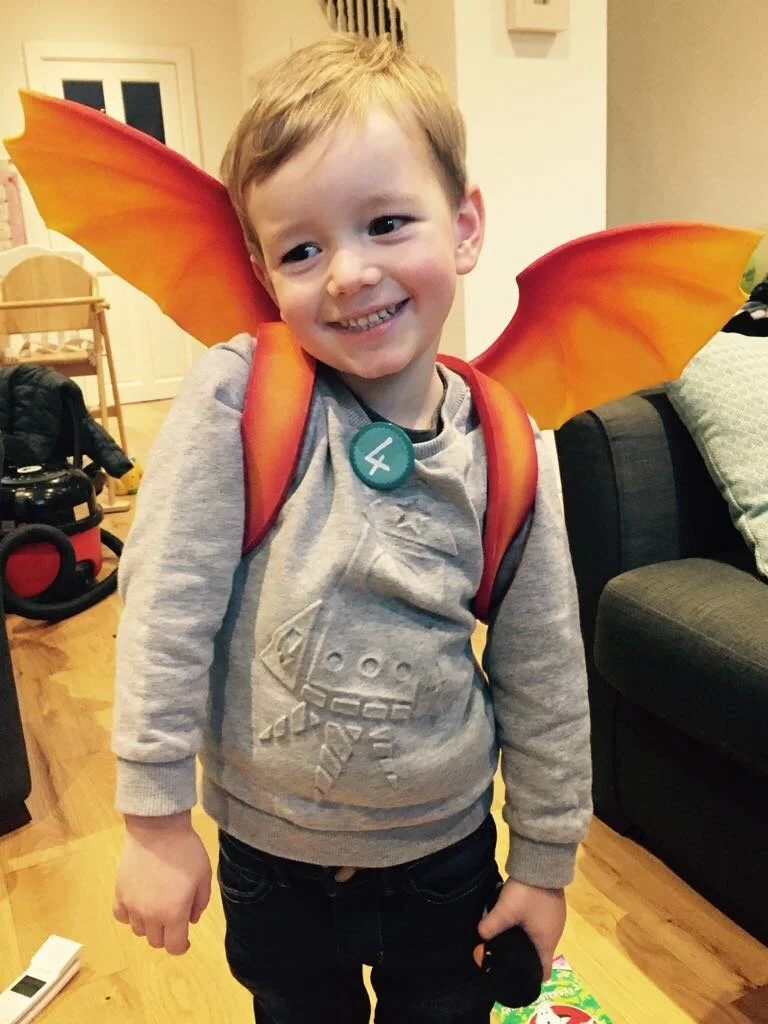
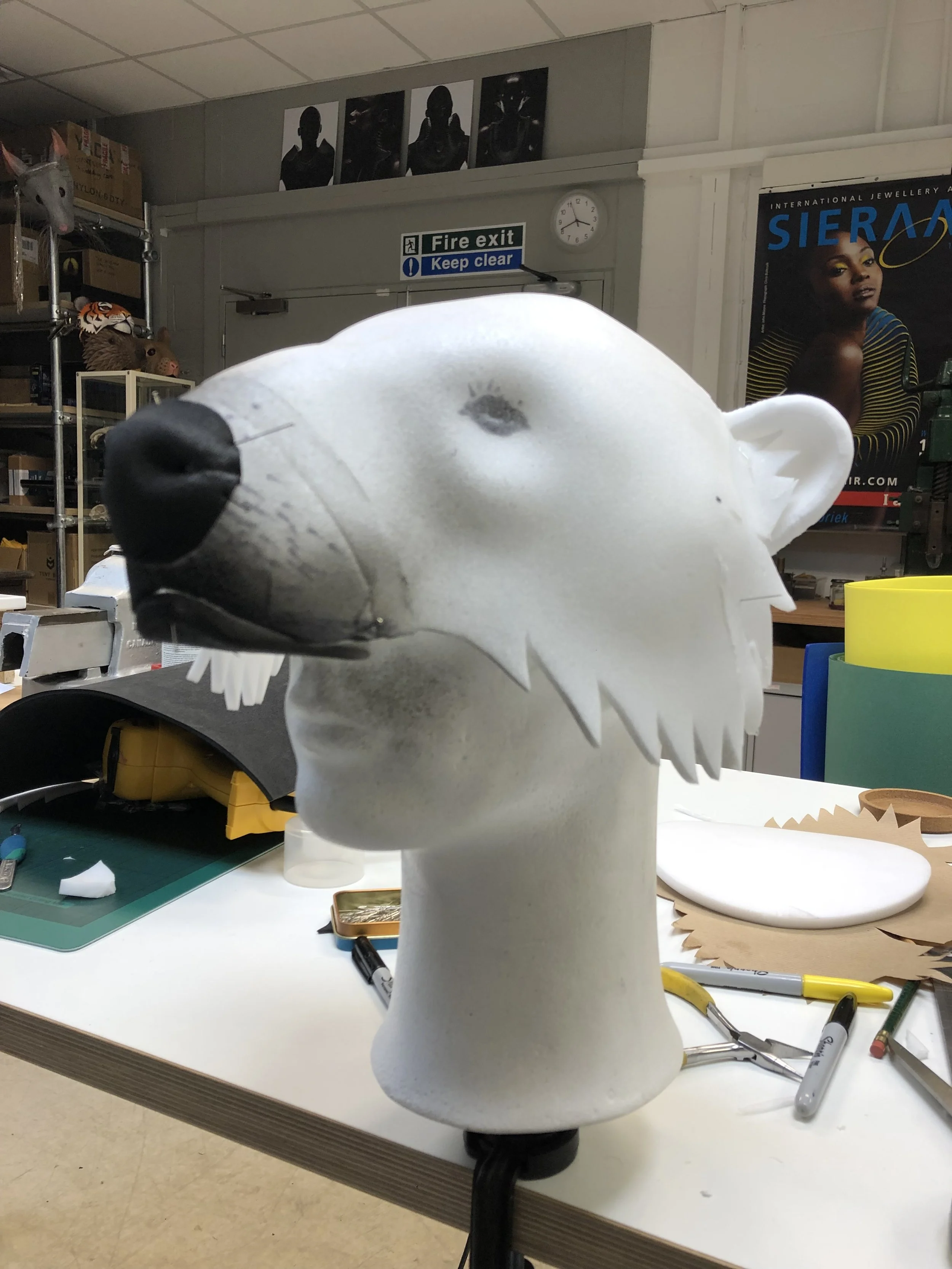
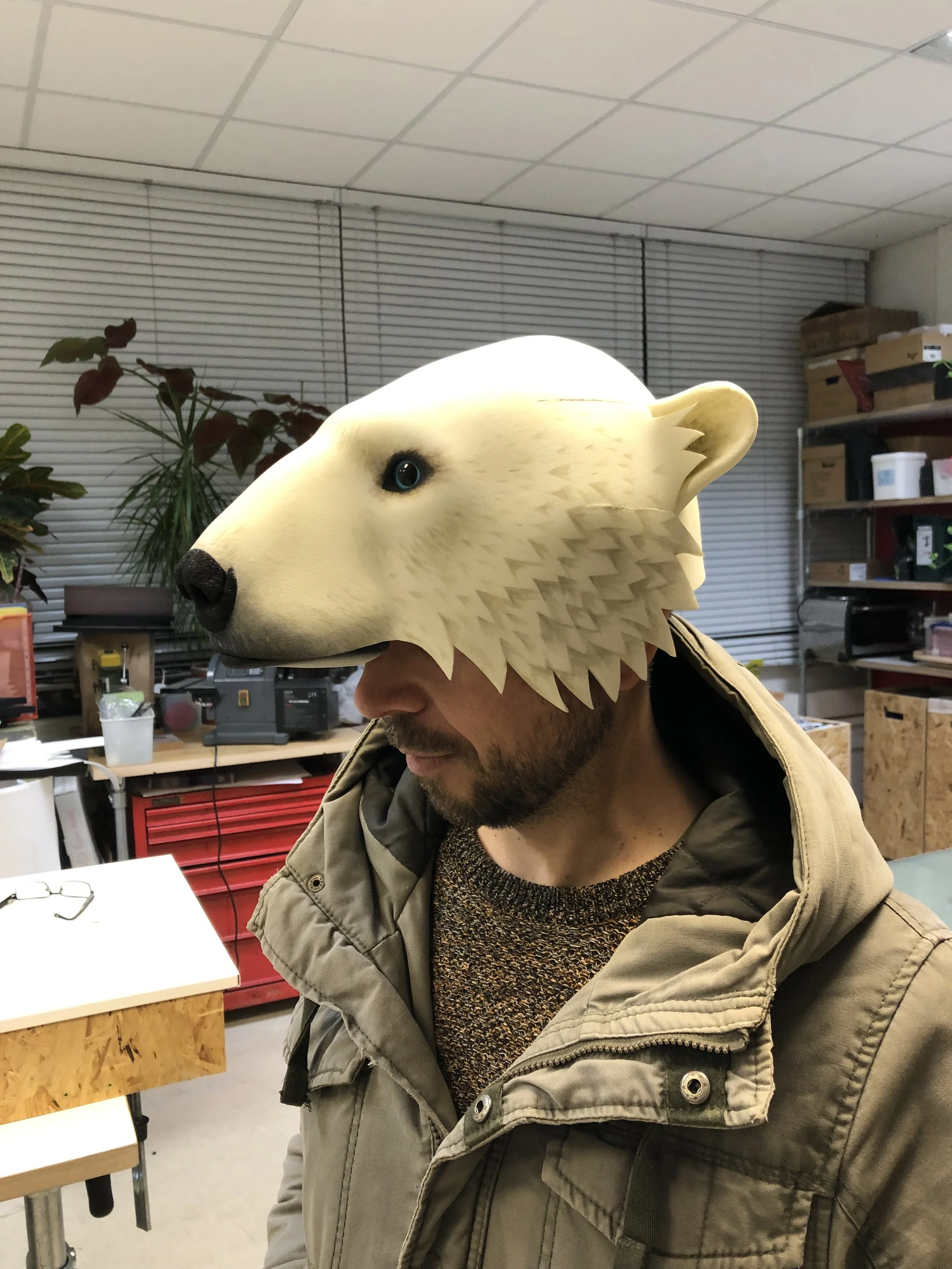
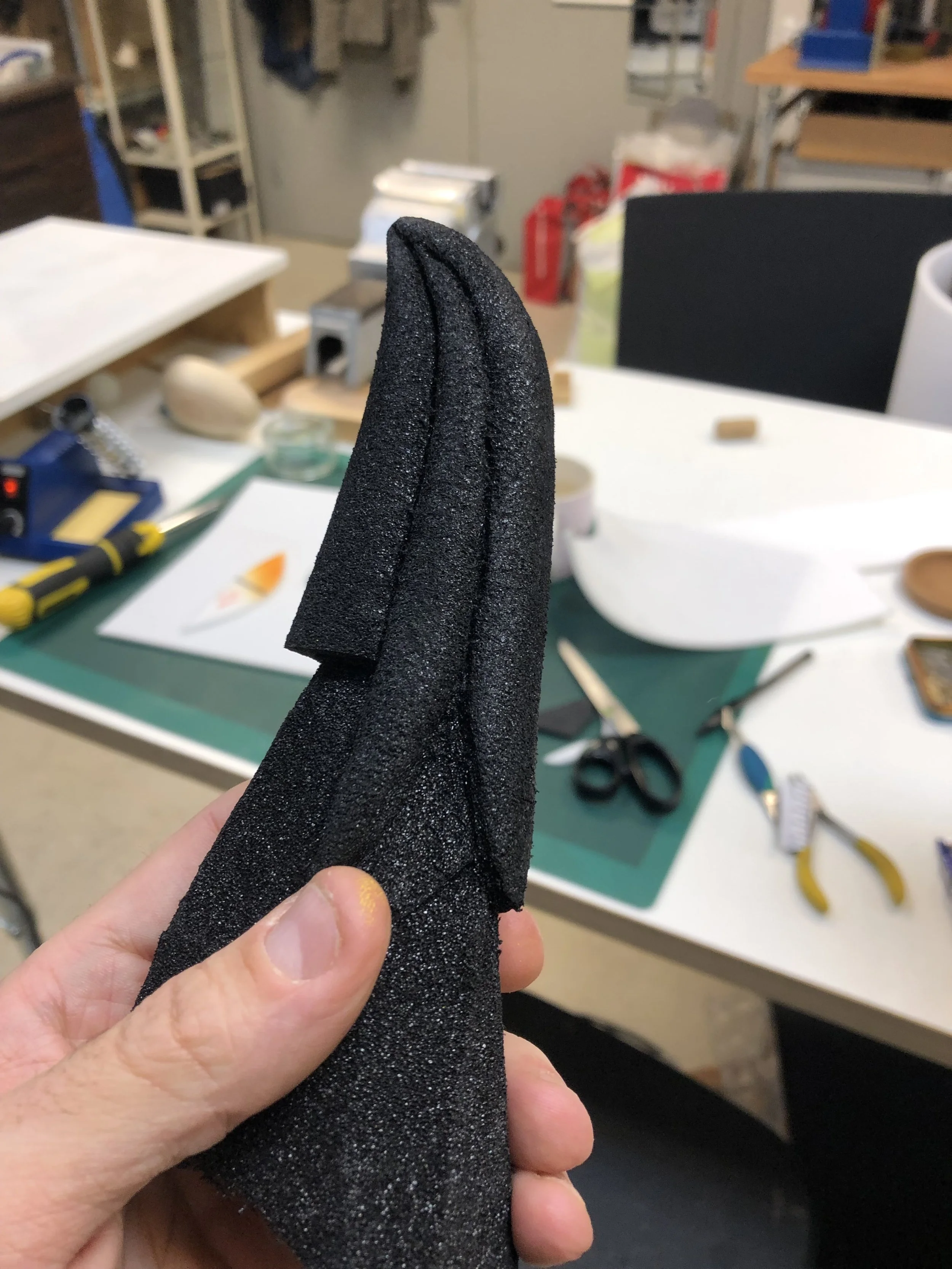
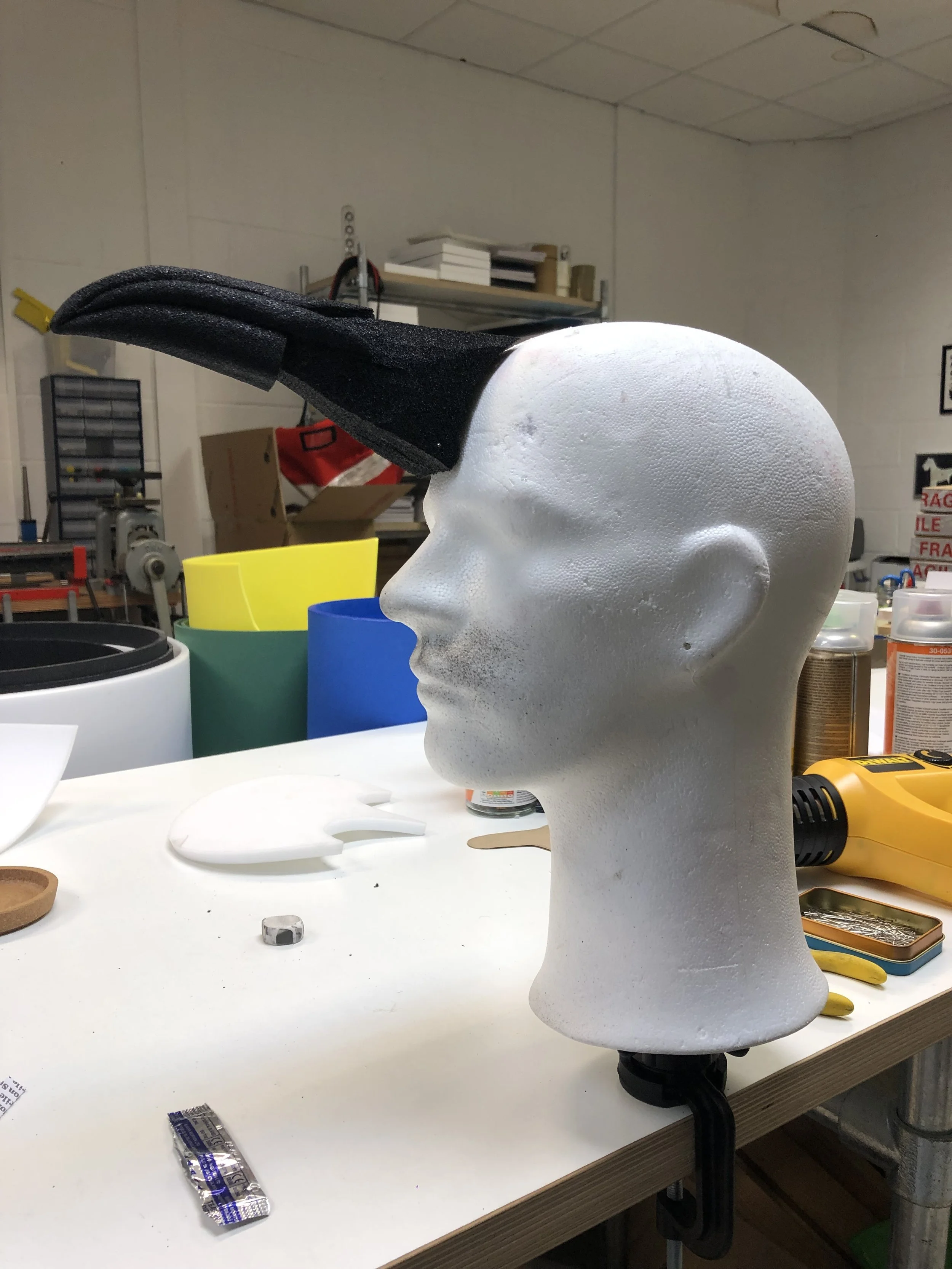
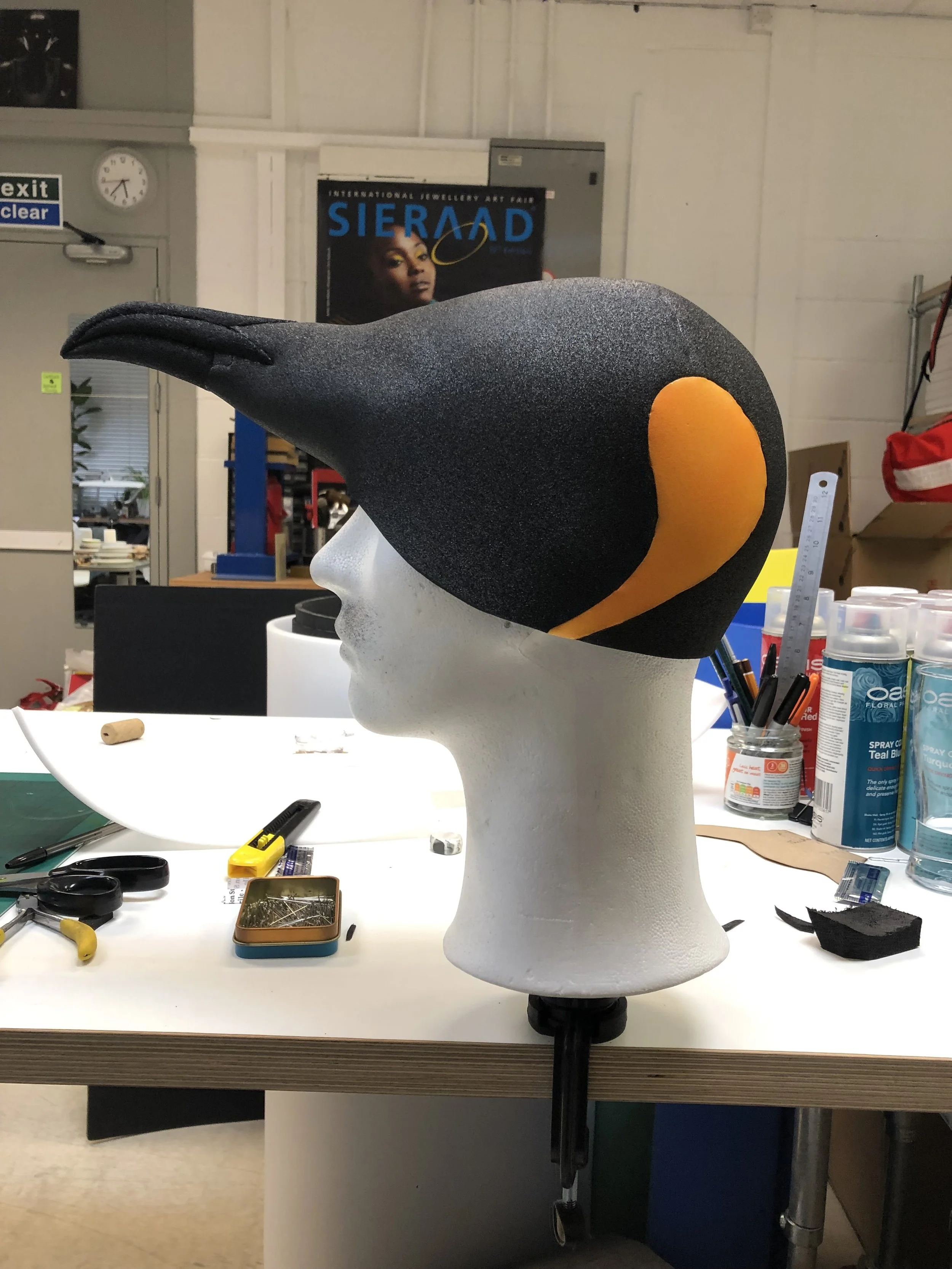
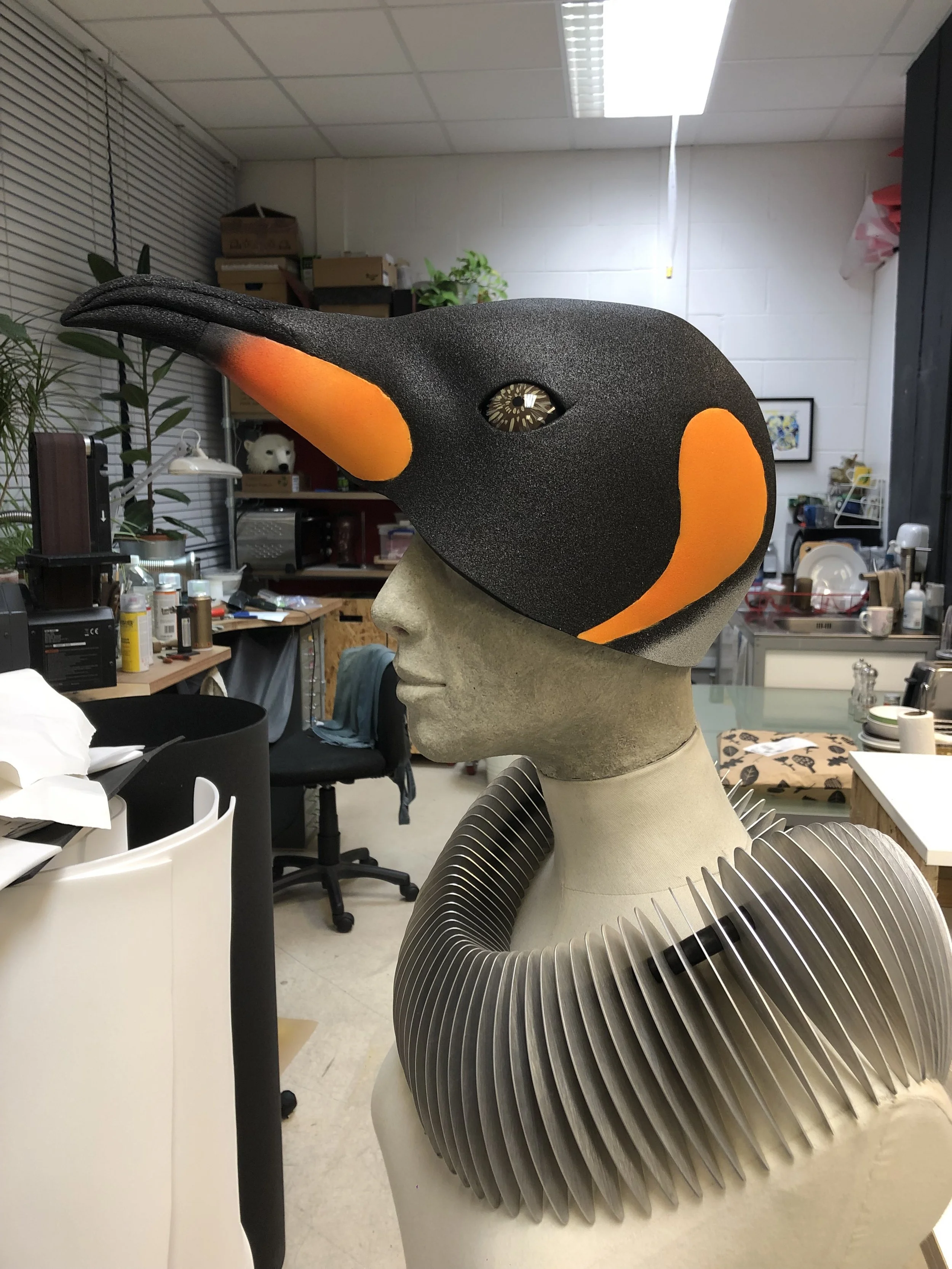
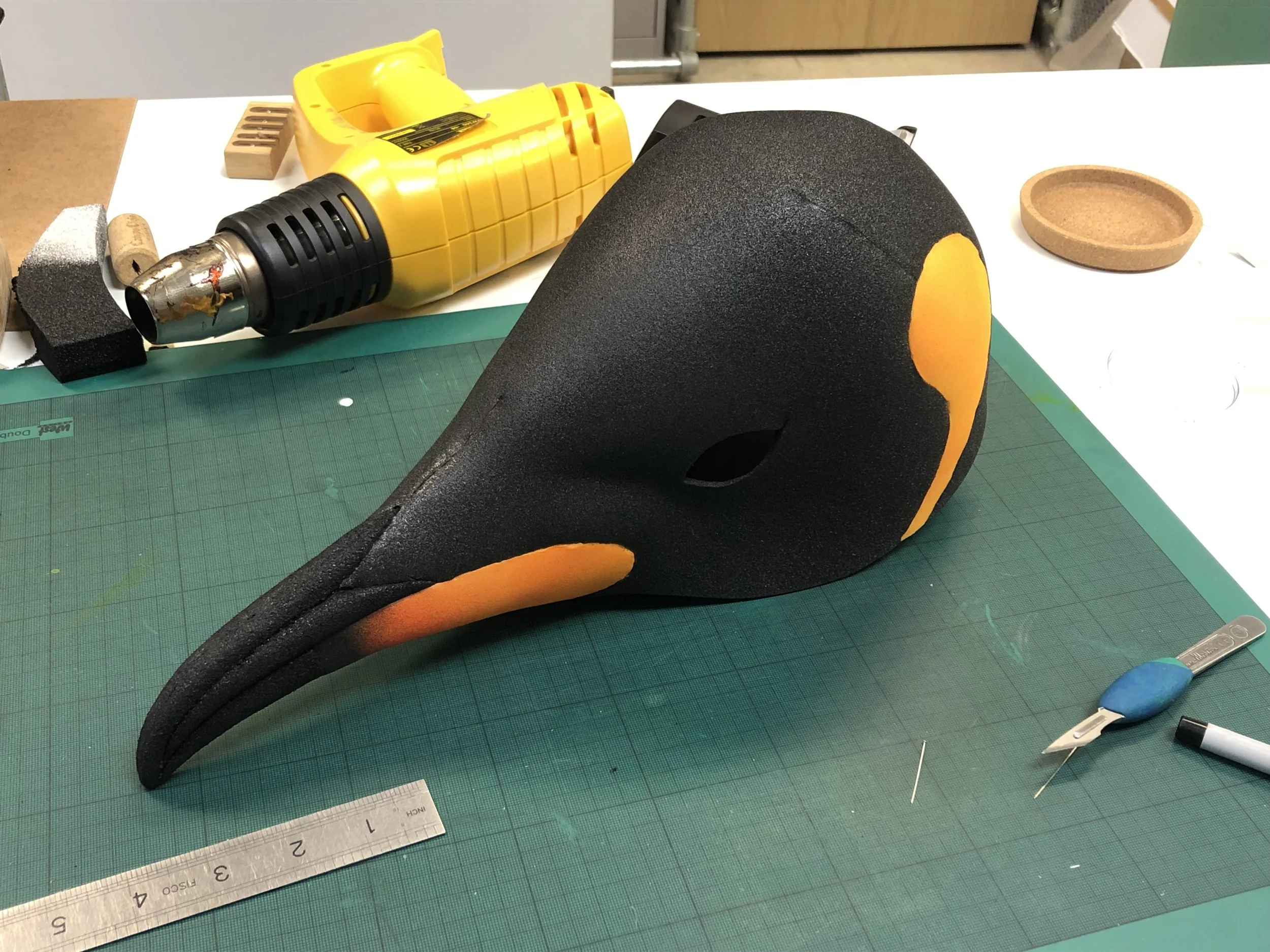
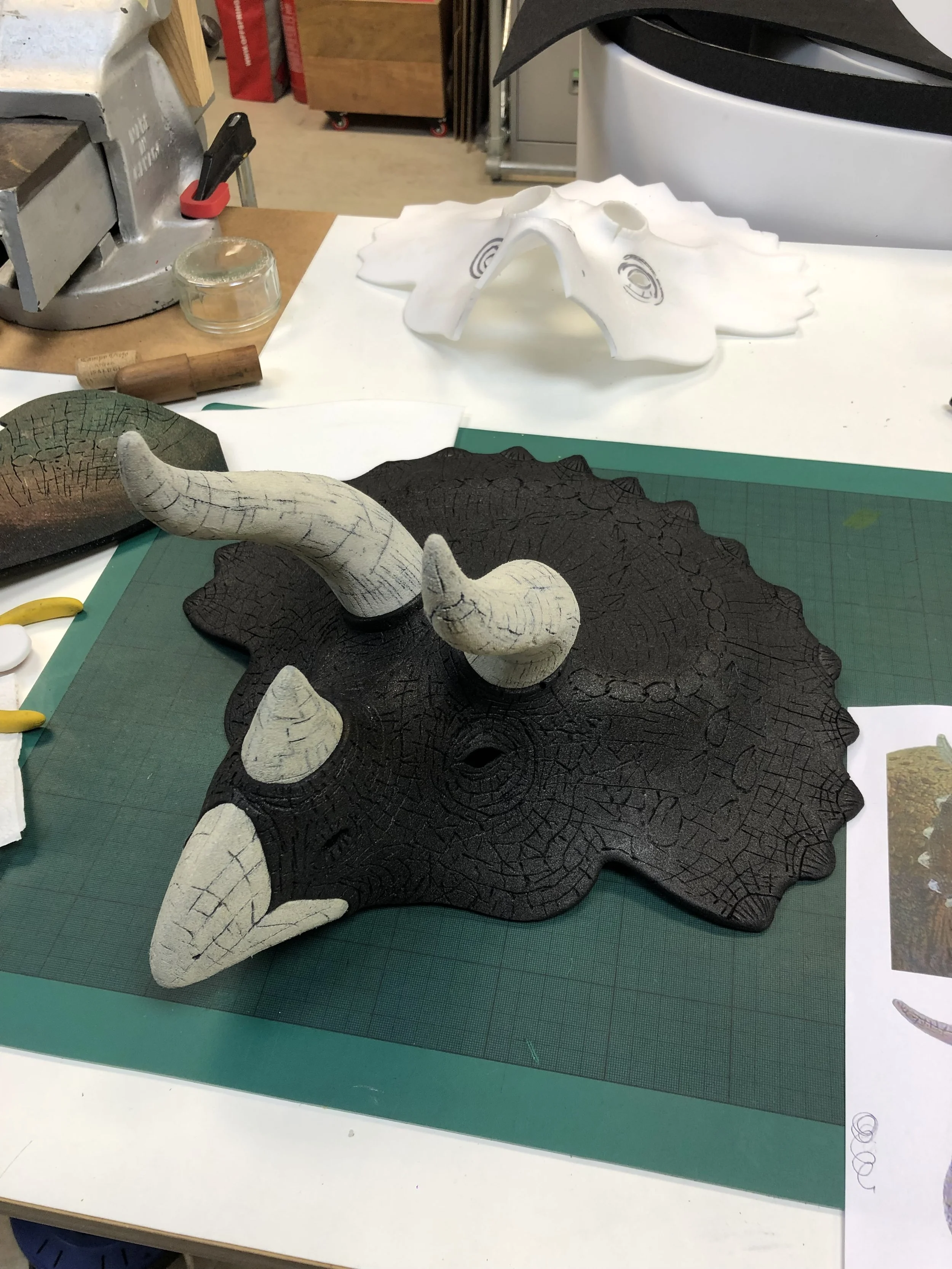
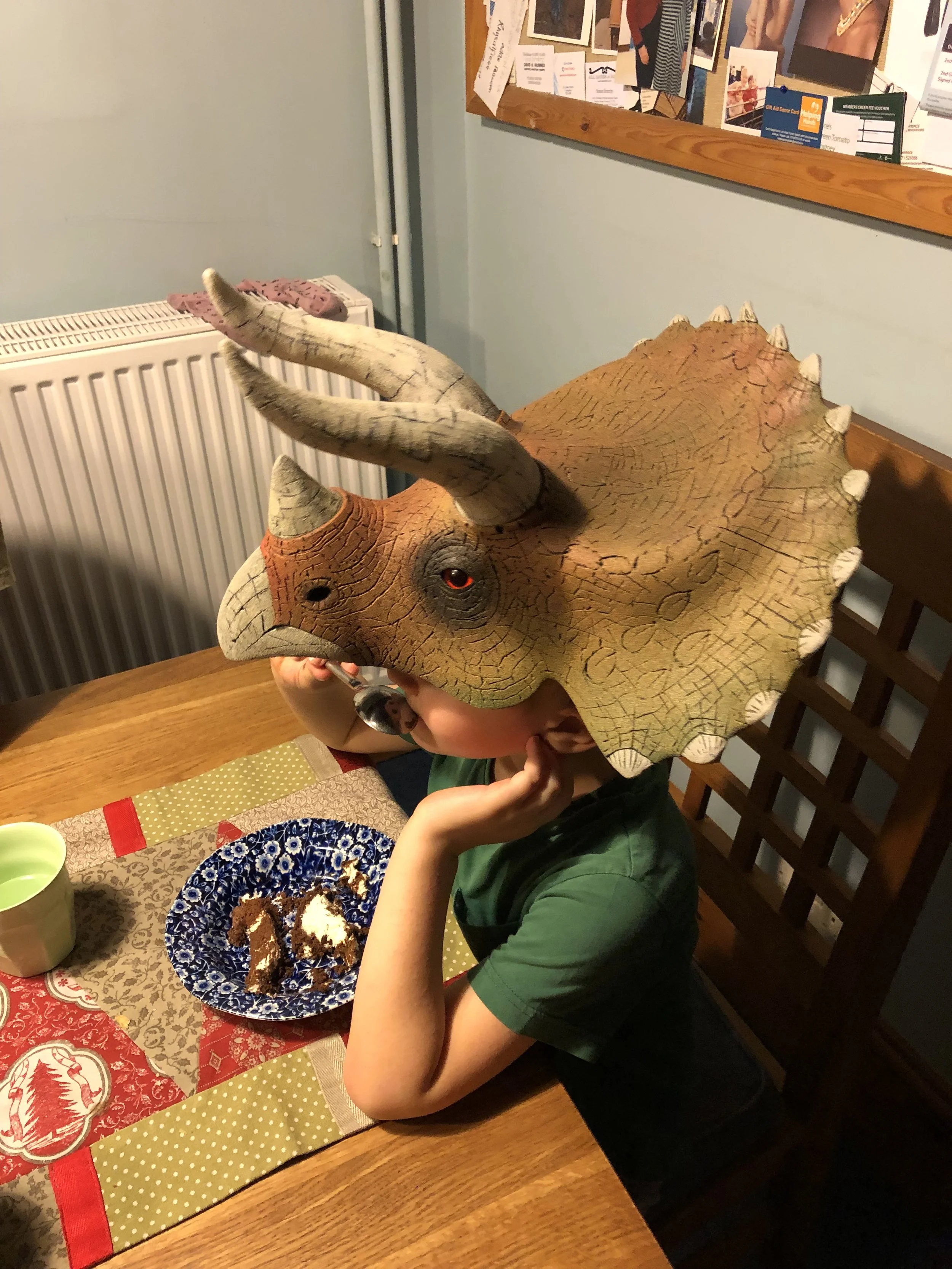
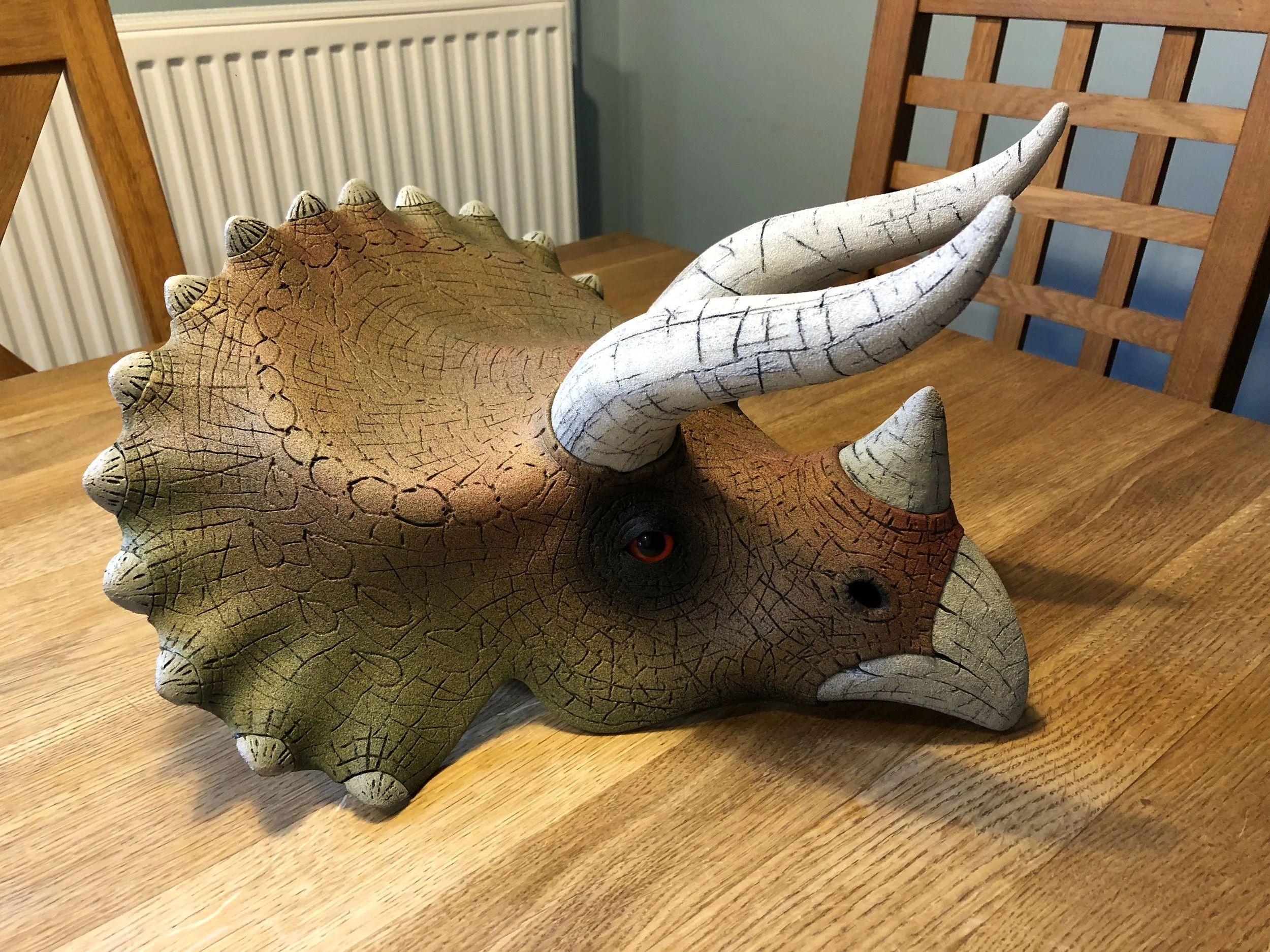
In the summer of 2025 a sponsored instagram post caught my eye. A puppet maker called Nick Barnes, famous for his work on the stage show of Life of Pi, was recruiting makers who could work with plastazote foam. It’s a material I have used to make various wearable pieces for festivals and fancy-dress objects for my niece and nephews (above). I assumed the workshop would be in London but to my surprise it was in Hove, close to where I live. Without knowing what the project was I casually applied, showed them my work and they offered me the job. It was only at the interview that I found out we would be making puppets for non other than the Royal Shakespeare Company, for a new production of Game of Thrones - The Mad King.
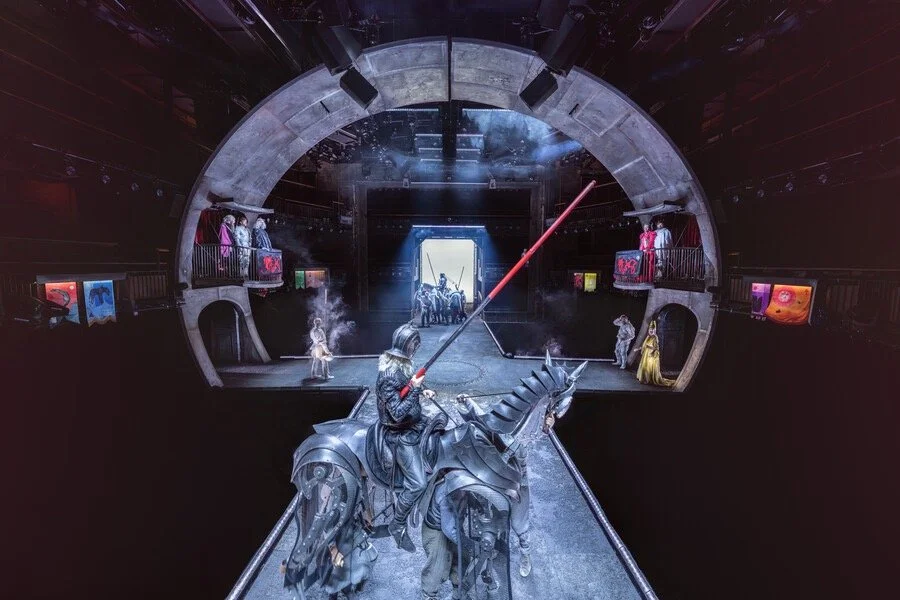
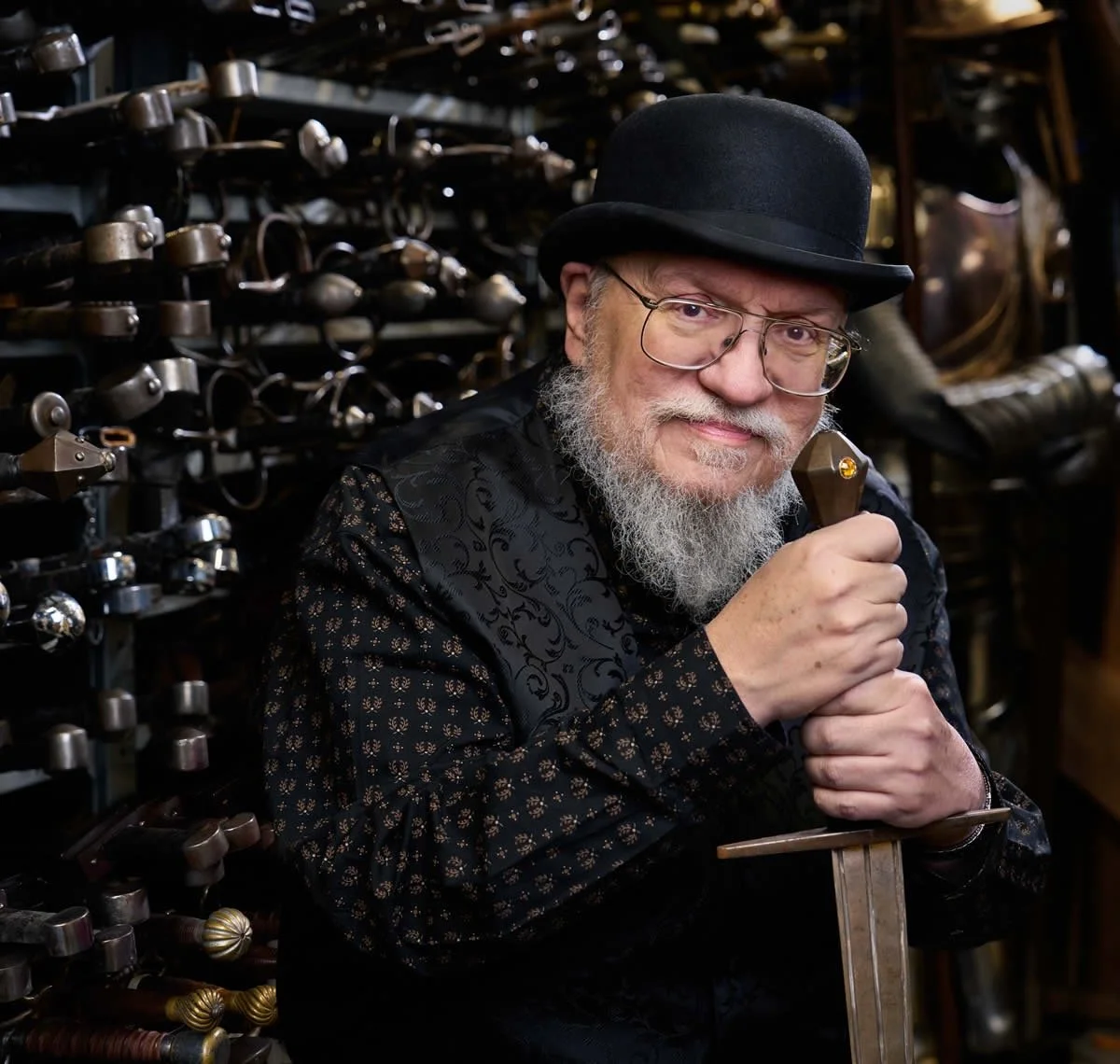
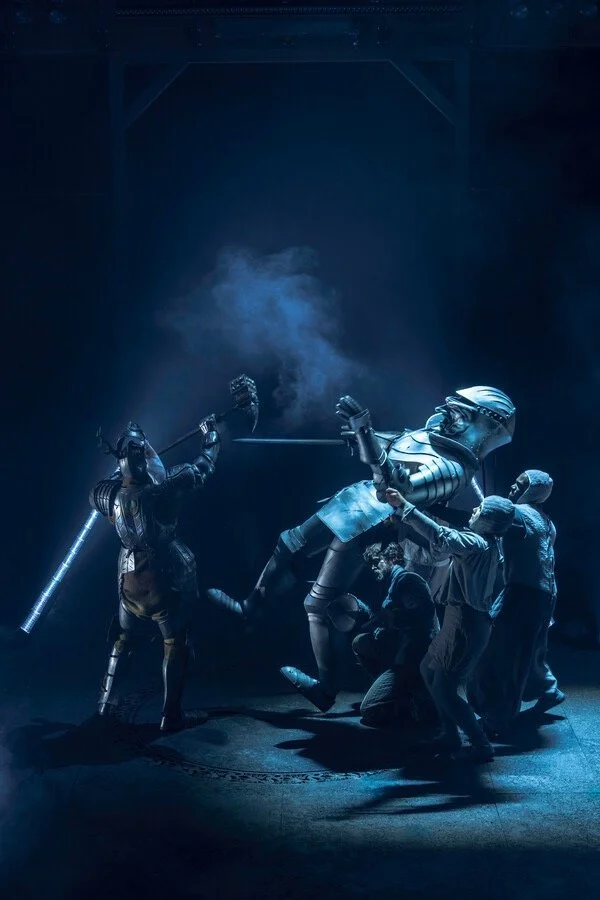
Set 17 years before the first, original Game of Thrones episode, the play centres around a jousting tournament - an event loaded with political tension, romance and betrayal between the various houses. It tells a part of George R. R. Martin’s epic story that (at the time of writing this) has not been adapted for screen. George R. R. Martin himself was an executive producer on the show. Characters are played by actors who are sometimes replaced by puppets for dramatic effect - knights wielding lances, galloping towards each other upon puppet horses, or on foot in armed combat.
In January 2026, I dived headfirst into puppet making while jewellery making took a backseat. The learning curve was steep, especially as someone who has been flying solo their entire adult life. I was suddenly part of a big team working on an enormously elaborate project with high stakes. It involved pulling together Georgia McGuinness’s stunning costume designs, visual research of real armour, complex mechanisms, durability, proportion, weight, the time restriction and of course Nick’s own creative vision. At the same time I was learning how to work with new materials and processes whilst drawing upon my own experience. It took a little while for me to gauge just how much was required of me in terms of creative input. It was far more than I expected. Every piece was new and presented its own unique set of problems. I was being trusted to make countless micro decisions that could have a knock-on effect further downstream so it was a case of knowing when to trust my judgement or to consult my busy colleagues.
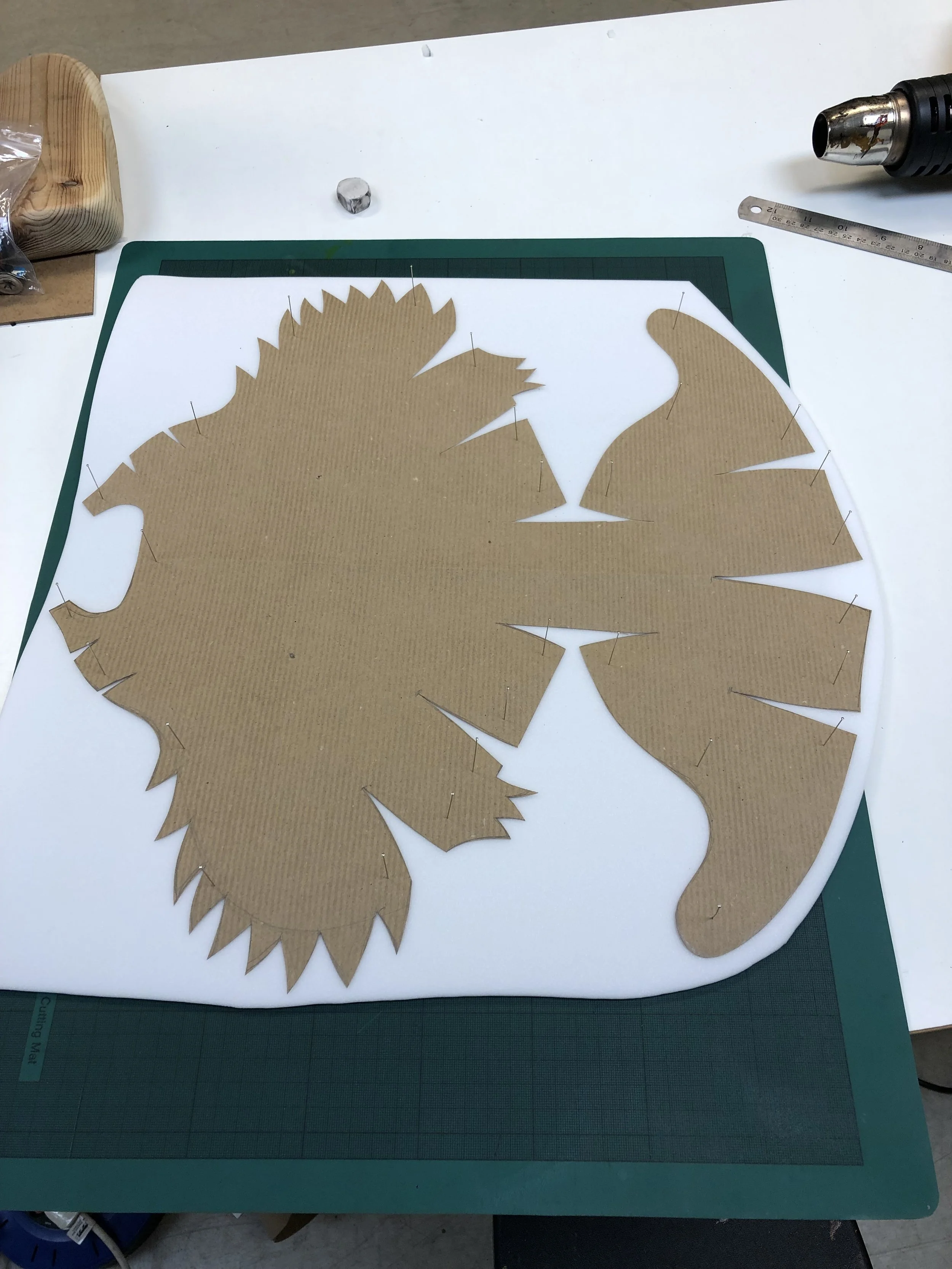
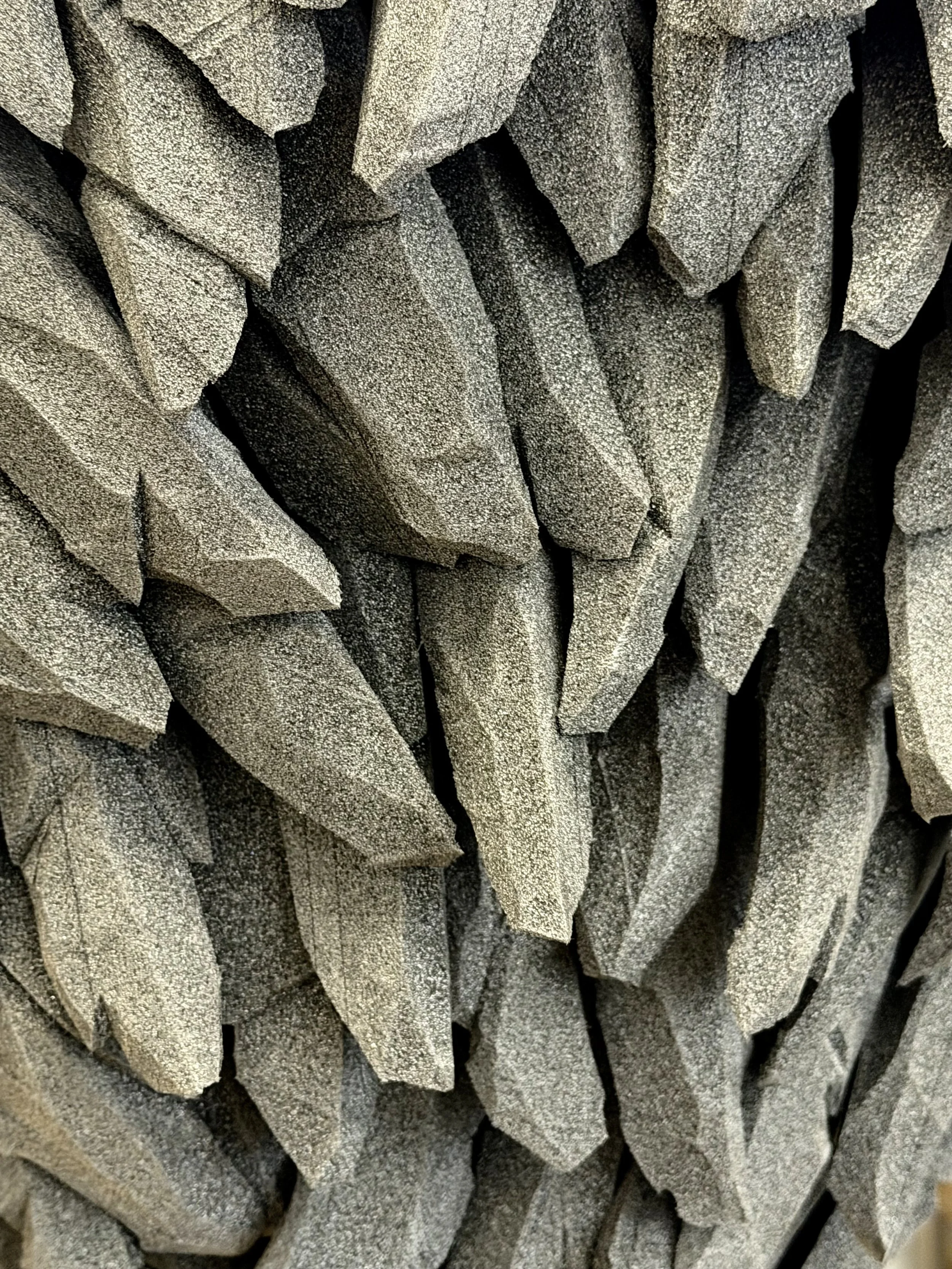
Most of my time was spent working on the many body parts for the knights, for example the Pauldron (shoulder), Vambrace (lower arm), Cuisses (thighs), Sabatons (feet) etc. Each followed a basic formula: sculpt - pattern - draft - final piece - painting - construction. Grey insulation foam (polystyrene) was carved to create a solid sculpt at 50% scale. This was then wrapped in layers of masking tape. Seam lines were carefully drawn on, numbered and cut with surgical precision before being peeled off to create the separate pattern pieces. Enlarged x200% (actual size) these were then cut from sheets of plastazote foam to make a draft. This draft was used to check the dimensions were correct, to make sure the form didn’t obstruct the desired range of motion, and to make further aesthetic and decorative decisions. All necessary changes/alterations happened at the draft stage, making sure to amend the pattern pieces accordingly. With the pattern finalised, a denser polyethylene foam (CF100) was used to make the final piece with seams joined using contact adhesive. This was then skilfully painted to look like metal before being joined to the mechanism, which had been made previously. I make it sound easy but it was a very long as demanding process that required a whole team of people.
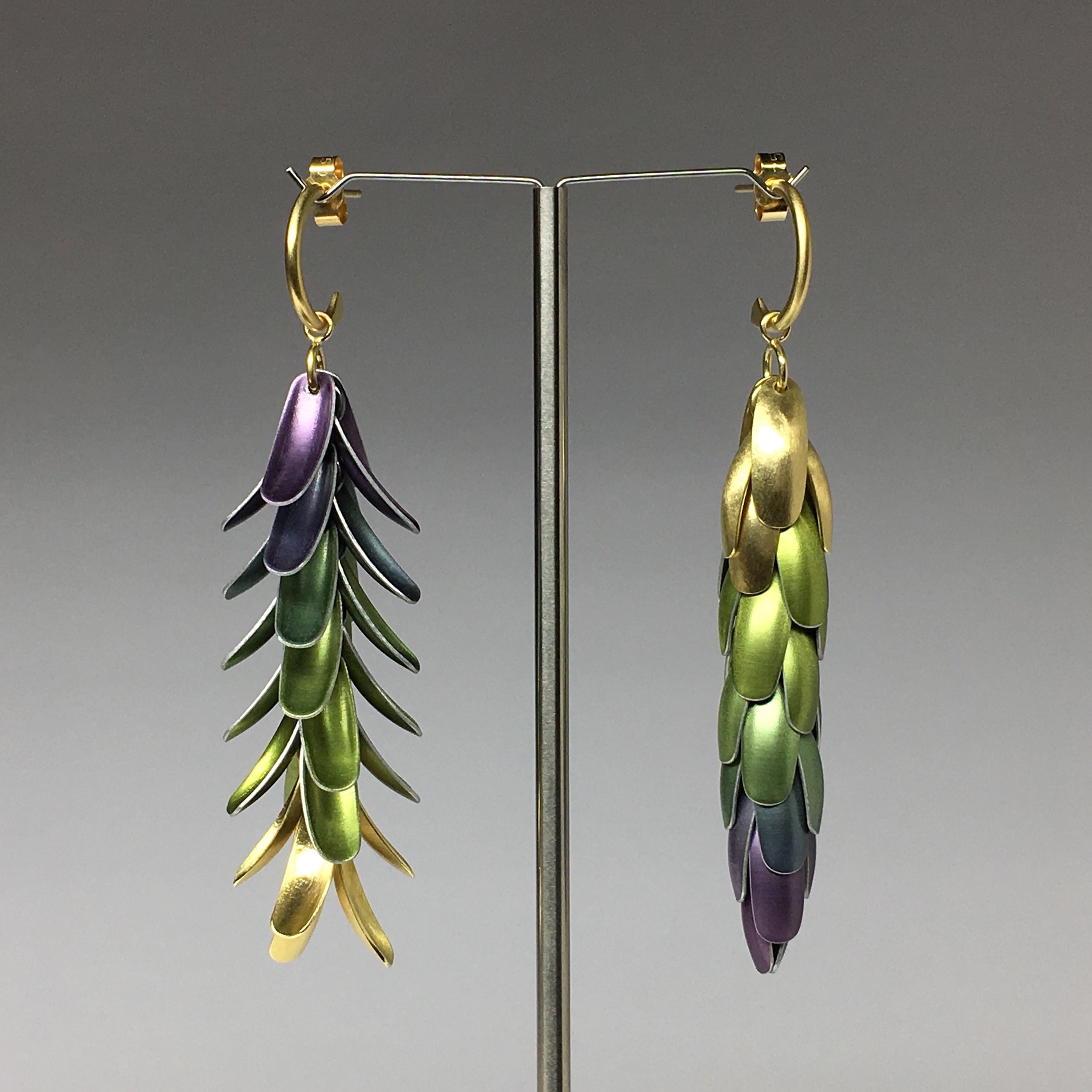
It’s interesting that I ended up making armour because armour and armoured creatures have always been a source of inspiration for my work. My first collection ‘Elytra’ was based on beetle wings with components arranged in a reptilian, scale-like formation. Subsequent works with sinuous movement remind us of centipedes and snakes. The Pagoda necklaces and more recently ‘Cranes Fighting in the Snow’ comprise over lapping plates reminiscent of a Pangolin’s armour plating.


My perfectionism was quickly spotted and I was tasked with some of the more difficult, fiddly jobs. For example, the King’s Guards’ helmets required some very precise work: angled cuts where the mitred seam down the centre of the visor needed to graduate from 0 to 45 degrees; fine line work to imitate an engraved pattern was achieved by hand cutting a groove into the curved surface with a consistent 2mm width. Everything was done by hand using a scalpel, with the clock ticking and no room for error. It was tricky and quite nerve-racking but ultimately a huge privilege and so much fun.
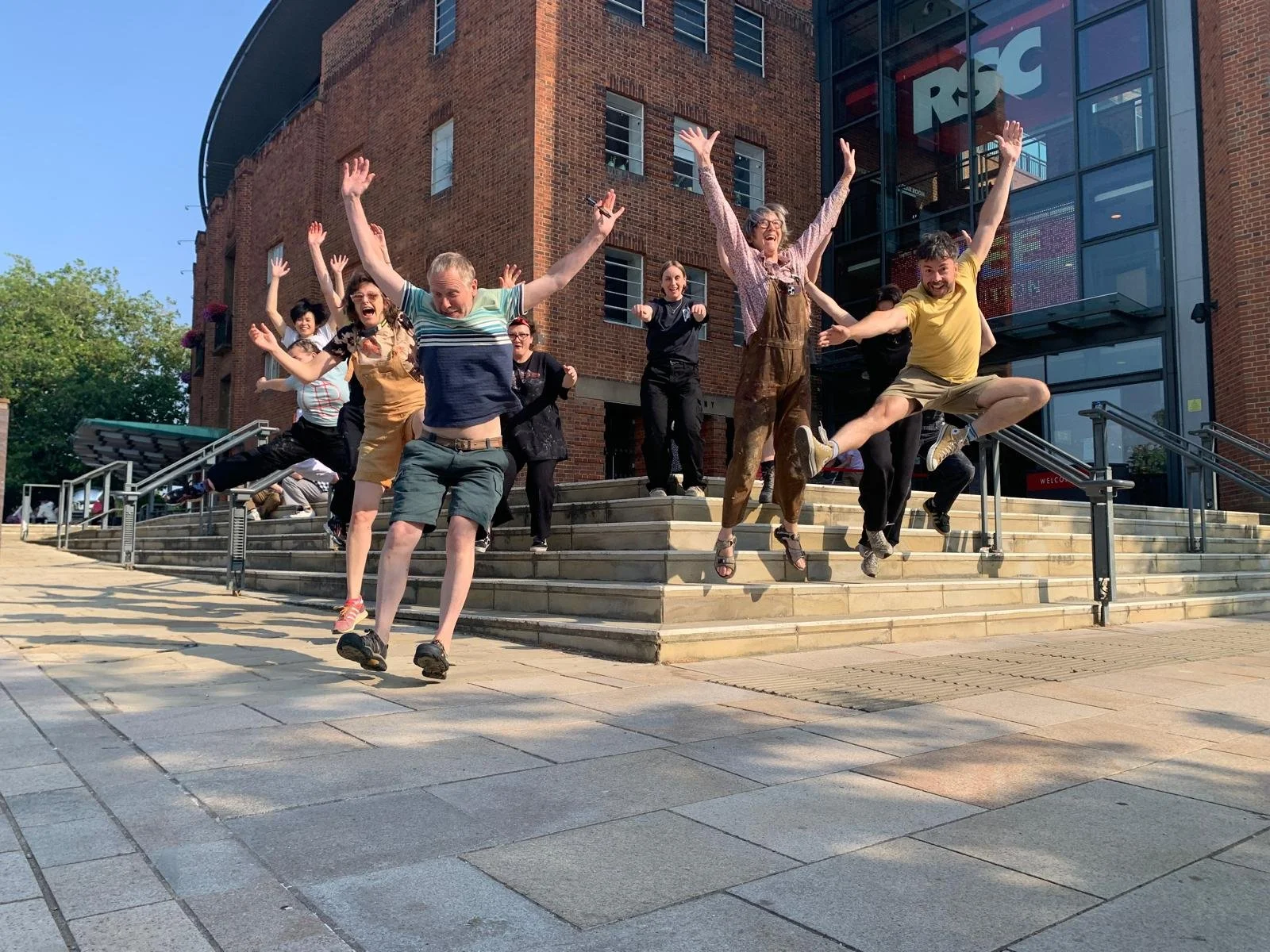
I was extremely fortunate to be part of a smaller team that travelled to Stratford-upon-Avon for ‘tech week’, the final stage of the process. This was in fact two weeks working on site, in a sun-baked portacabin and backstage in the Royal Shakespeare Theatre, watching rehearsals, taking notes, rectifying any technical issues through making adjustments and sometimes whole new pieces. At one point I was asked to make a giant sword for Rhaegar Targaryen, ready for rehearsal the next day! It was intense and amazing.
After two cancelled previews due to technical issues, Game of Thrones - The Mad King premiered in July 2026 and ran for 5 weeks, receiving numerous 4 and 5 star reviews. I went to see it a few weeks in and even despite having been part of the production, making the puppets and witnessing the rehearsal process, it was no less magical. I was totally blown away and even shed a few proud tears. As you might be able to see in the images above, the stage is a cross shape with four entrances, including an enormous double door in place of the proscenium arch. The audience surround the stage on all four sides so you really feel like you’re immersed in the action. The story is gripping. The quality of the performance was absolutely world class. The sound design was amazing, as were all the production values. And of course the puppets were stunning. The way the puppeteers bring them to life so skilfully is just incredible.
Game of Thrones - The Mad King will tour to London in 2027 although dates and venue have not yet been announced. Visit the RSC website and signup to the tour mailing list
But it didn’t end there! I then had pleasure of being invited back into the puppet studio for the next project - Jungle Book for the National Theatre. Yet another incredible making experience and totally different. Game of Thrones was all about precision, angled cuts in sheets of polyethylene foam to imitate armour, whereas animals required a much looser, more gestural approach - lots of carving into solid plastazote foam. At first I found it difficult to let go of my perfectionist tendencies but then gradually I began to feel into the material with a sense of freedom I’ve never experience before.
Jungle Book will open at The National Theatre on London’s South Bank on Friday 13th November 2026 and run until Saturday 6th February 2027.
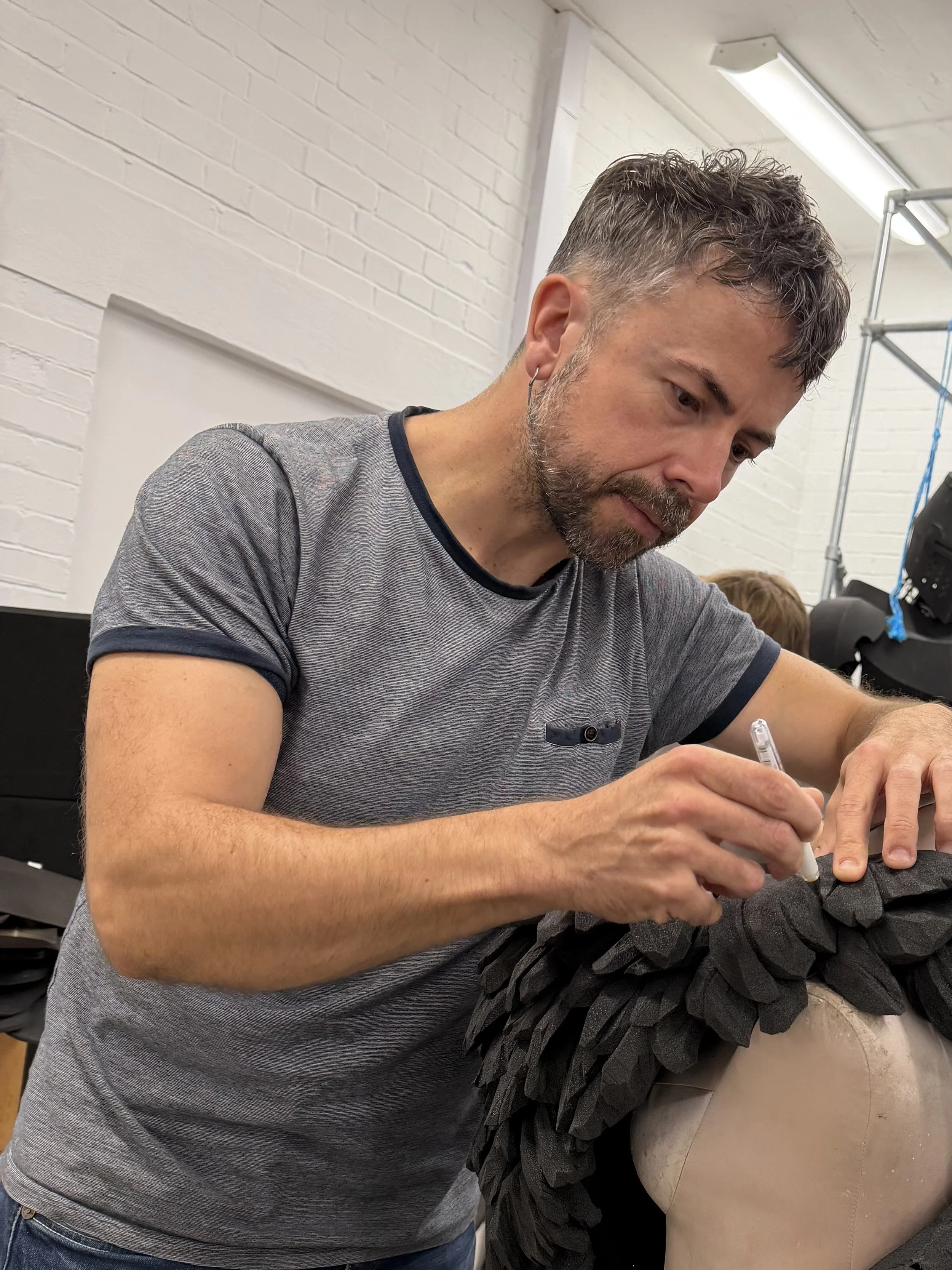
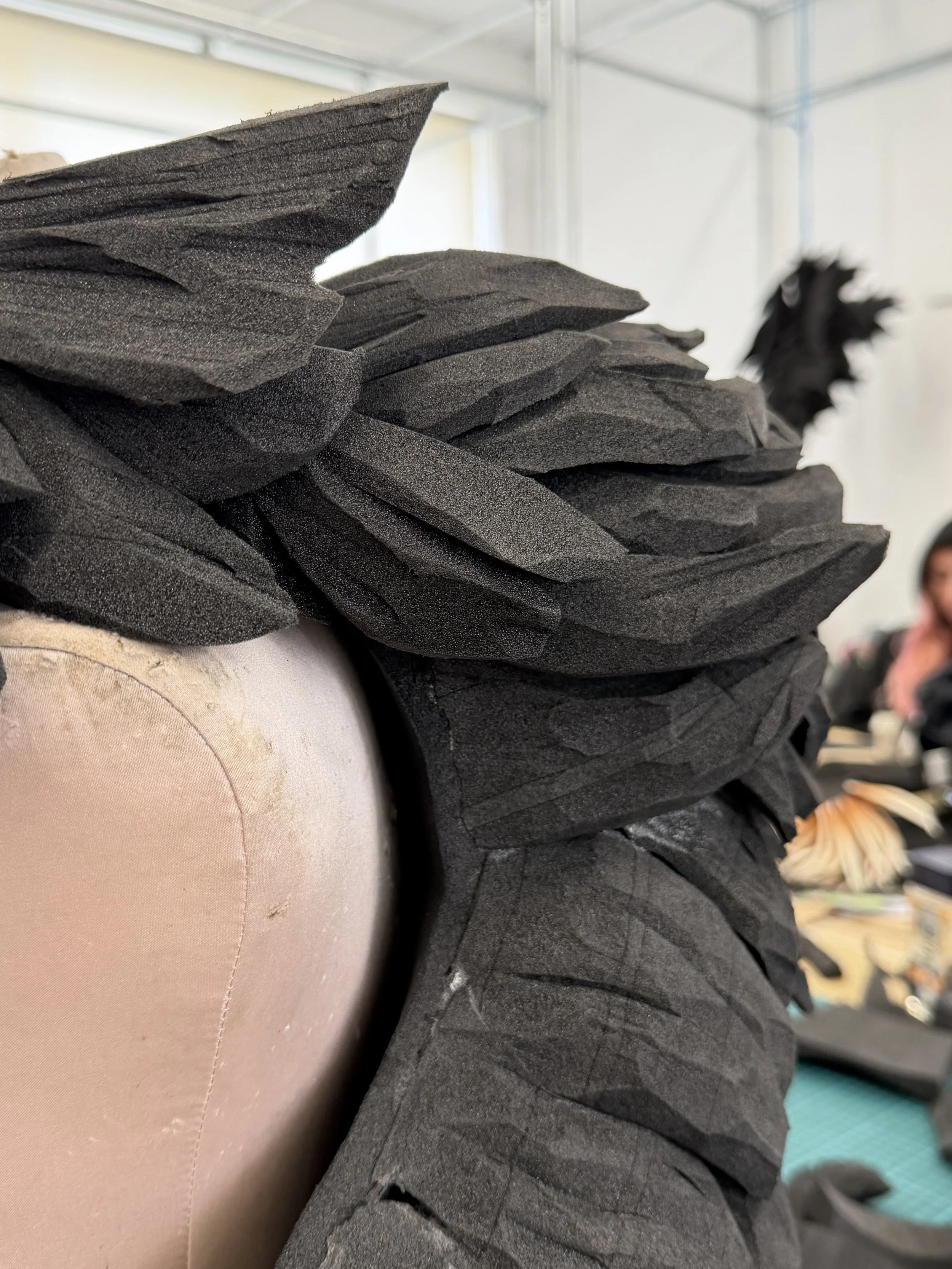
So 2026 has been a very special year for me, full of new experiences, challenges and huge achievements that I’m immensely proud of. Nick and the team he gathered for both projects are among the most talented people I’ve ever met and it was a joy to work along side them. I’ve learned so much both technically and about myself, and now I’m excited to get back into my own work, inspired, fresh and ready to go.
To have an opportunity like this at this stage of my career has been the most immense privilege and a real full-circle moment.
It goes to show that anything is possible.
If there’s something you want to do and there’s someone telling you can’t, take no notice.
Thank you for reading.